


Introduction
Most Amazon purchases don’t start on Amazon. Buyers scroll Instagram, watch YouTube reviews, read blogs, then open Amazon only when they’re ready to buy. That behavior creates a powerful advantage for sellers who understand How To Drive External Traffic To Amazon properly.
This guide shows how to turn off-platform attention into ranking signals and sales momentum, without relying solely on Amazon ads.
Drive Traffic to Amazon: A Step-by-Step External Traffic Strategy
Driving external traffic to your Amazon listings is one of the most powerful ways to boost sales, improve organic rankings, and reduce your dependence on expensive Amazon PPC campaigns. When you bring visitors from platforms like Instagram, Google, or your own blog, Amazon's algorithm rewards you with better visibility.
Here's exactly how to do it.
Step 1: Set Up Amazon Attribution Tracking

Before sending a single visitor to your Amazon listings, you need to establish proper tracking infrastructure, a foundational step in any results-driven Amazon store marketing services strategy.
Head to the Amazon Attribution dashboard at advertising.amazon.com/attribution and generate attribution tags for each traffic source you plan to use. These tags create unique tracking URLs that wrap around your standard Amazon product links.
Key elements to set up:
- Create separate attribution tags for each platform (Instagram, Facebook, YouTube, blog, email, paid ads)
- Generate distinct URLs for different campaigns within the same platform
- Label each tag clearly so you can identify performance at a glance
- Test each attribution link before launching campaigns
Pro Tip: Create a spreadsheet to organize all your attribution URLs alongside their corresponding campaigns. This prevents confusion when scaling multiple traffic sources and makes reporting much easier.
Step 2: Choose Your Primary Traffic Channels
Rather than spreading yourself thin across every platform, focus on 3 to 5 channels where your ideal customers actually spend their time. A kitchen gadget might thrive on Pinterest and food blogs, while a tech accessory could perform better on YouTube and Reddit.
Consider these proven channels:
- Social media platforms: Instagram, TikTok, Pinterest, Facebook
- Content marketing: Blog articles, YouTube videos, podcasts
- Email marketing: Customer lists, newsletter subscribers
- Paid advertising: Google Ads, Facebook Ads, native advertising
- Influencer partnerships: Micro and macro influencer collaborations
Start by researching where your competitors are successful. Your first channel should be where you can create quality content consistently.
Step 3: Create Platform-Specific Content

Each platform has its own content style and user expectations. Tailor your content format to match how users consume information on each platform.
Content types by platform:
- Instagram/TikTok: Short product demos, before/after transformations, user testimonials
- Pinterest: High-quality lifestyle images, step-by-step infographics, product comparison pins
- Blogs: In-depth product reviews, detailed comparisons, "best of" roundups
- YouTube: Unboxing experiences, tutorial videos, problem-solution demonstrations
- Email: Product launch announcements, exclusive discount campaigns
The content must provide genuine value beyond just promoting your product. On YouTube, create a tutorial showing how to solve a problem with your product, naturally integrated into the solution.
Step 4: Optimize Your Amazon Listings Before Driving Traffic
Sending traffic to a poorly optimized listing wastes money and opportunity. Before launching any external campaigns, make sure your Amazon storefront is optimized for the highest conversion rate possible. Even the best traffic won't convert if your listing can't close the sale.
This is why experienced sellers either audit listings internally or work with an Amazon SEO agency before pushing external traffic.
Pre-traffic optimization checklist:
- Product Images: Upload at least 7 high-quality images, including main image, lifestyle shots, infographics showing features and benefits, size comparisons, and close-up detail shots
- Reviews & Social Proof: Accumulate a minimum of 15 to 20 verified customer reviews through Amazon Vine or early reviewer programs
- Conversion-Focused Copy: Optimize your title, bullet points, and description specifically for conversion, not just SEO. Focus on benefits over features, address common objections, and include clear value propositions
- A+ Content: Enable Amazon A+ Content (Brand Registry required) with comparison charts, brand story, and enhanced visuals that can increase conversion rates by 5% to 10%
- Competitive Pricing: Verify your pricing sits within the competitive range for your category (use the top 20% of similar products as your benchmark)
- Inventory Depth: Ensure stock levels can support 3x to 5x your normal daily sales volume to avoid stockouts during traffic surges
- Mobile Experience: Test your entire listing on mobile devices (where 70% or more of external traffic will view it) to ensure images, videos, and copy display properly
Conversion rate benchmark: Your listing should convert at a minimum 10% to 12% on Amazon PPC traffic before you invest in external sources. Test with small PPC campaigns first, then optimize until you hit this threshold.
Step 5: Implement Attribution Links Across All Channels
Every piece of content, every social media profile, and every advertisement should use your tracked attribution links instead of regular Amazon URLs. This is how you'll measure which efforts actually generate sales.
Attribution link placement strategy:
- Social media bios: Use link-in-bio tools like Linktree or Stan Store with attribution URLs
- Blog content: Embed attribution links in call-to-action buttons and product mentions
- YouTube videos: Place attribution links in video descriptions and pinned comments
- Email campaigns: Replace all standard Amazon links with attribution URLs
- Paid advertisements: Configure all ad destination URLs to use attribution tracking
Make this process systematic by creating templates for each platform. When you write a blog post, have a standard CTA button with your attribution link ready to insert.
Step 6: Launch Your First Campaign
Rather than launching everywhere at once, start with one proven channel and master it before expanding. Create enough content to test performance, typically 3 to 5 pieces over a short timeframe.
Campaign launch examples:
- Instagram approach: Post one Reel daily for 5 consecutive days, each showcasing different product use cases
- Blog strategy: Publish 3 comprehensive articles (product review, comparison post, buying guide)
- Email sequence: Deploy a 3-email campaign with value content, product introduction, and discount offer
The goal is to gather data on what resonates. Monitor which content pieces drive the most clicks and conversions, then double down on that format.
Step 7: Leverage Influencer and Affiliate Partnerships
Influencers and affiliates bring established audiences already interested in your product category. Focus on micro-influencers with 5,000 to 50,000 followers who have higher engagement rates and more affordable partnership costs.
Partnership implementation steps:
- Identify 10 to 20 micro-influencers in your niche using hashtag research
- Reach out with personalized messages offering product seeding or commission-based partnerships
- Provide influencers with unique discount codes paired with attribution links
- Offer 10% to 15% affiliate commissions through Amazon Associates
Create an influencer kit that makes promotion easy: high-quality product photos, key talking points, your brand story, and suggested content angles.
Step 8: Run Paid Traffic Campaigns
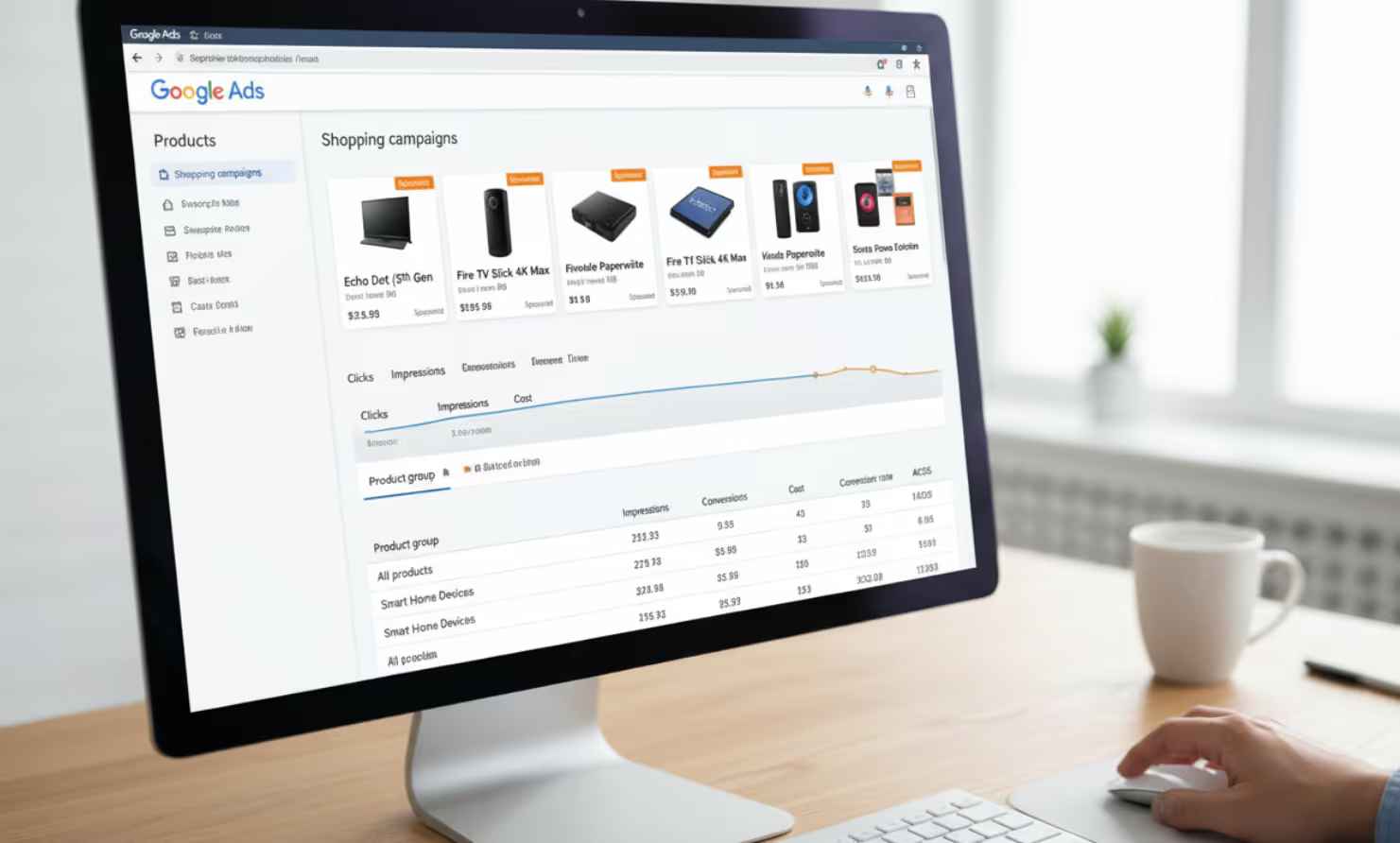
Once you've validated that your organic traffic converts profitably, Amazon advertising can scale your results significantly faster. Start conservatively with small budgets and gradually increase spending on campaigns that maintain acceptable profitability.
Paid traffic channel setup:
- Google Ads: Launch Shopping campaigns targeting product keywords, directing clicks to Amazon
- Facebook/Instagram Ads: Create conversion campaigns with compelling imagery and "Shop Now" CTAs
- Budget approach: Begin with $10 to $20 daily per platform, scaling based on performance
- Target metrics: Aim for 20% to 30% ACOS on external traffic campaigns
Test multiple ad creatives and audience targets from the start. Monitor your campaigns daily during the first week, then adjust to weekly reviews once performance stabilizes.
Step 9: Build Owned Traffic Assets
The most valuable traffic comes from assets you control completely. Building owned media creates long-term sustainability and dramatically reduces your customer acquisition costs over time.
Owned asset development:
- Launch a simple brand website with blog content linking to your Amazon listings
- Build an email list through valuable lead magnets, like buying guides or exclusive discounts
- Start collecting customer data outside Amazon's ecosystem
- Create evergreen content that continues attracting visitors months or years after publication
A well-optimized blog post can drive Amazon sales for years with minimal maintenance, while an email list lets you launch new products to warm audiences instantly.
Step 10: Monitor, Measure, and Optimize
External traffic success requires consistent performance analysis and a willingness to cut what doesn't work. Check your Amazon Attribution dashboard weekly to identify which sources drive actual sales, not just clicks.
Performance tracking framework:
- Review key metrics: click-through rate, conversion rate, ACOS, total attributed sales
- Identify top-performing traffic sources based on a conversion rate above 3% and an acceptable ACOS
- Double down on winning channels by increasing content frequency or ad budgets
- Eliminate or optimize channels that underperform after 30 days of consistent effort
Be ruthless about cutting losers. Your time and budget are limited; concentrating on what works beats mediocre performance across many channels.
Start with Step 1 today, and watch your Amazon traffic grow systematically over the next 30 days.
External Traffic Mistakes That Kill Your Amazon Sales (And How to Avoid Them)
Even the most well-intentioned external traffic campaigns can fail spectacularly if you make critical mistakes. Understanding what derails campaigns before you launch saves you thousands of dollars and months of wasted effort.
Here are the seven deadly mistakes Amazon sellers make when driving external traffic, and how to avoid each one.
Violating Amazon's Terms of Service

Amazon has strict rules about external traffic, and violating them can result in account suspension. Many sellers unknowingly break these policies while trying to boost sales, putting their entire business at risk. The consequences aren't just campaign failures; they're a complete loss of selling privileges.
Stay compliant by:
- Never offer free products in exchange for positive reviews through external channels
- Don't use misleading redirects that take customers to different products than advertised
- Avoid sending traffic to listings with prohibited claims or restricted products
- Review Amazon's current promotional guidelines before launching any campaign
- Stay updated on policy changes by checking Seller Central announcements monthly
Driving Traffic to Poorly Optimized Listings
Sending thousands of visitors to a listing with three amateur photos and no reviews is like pouring water into a bucket with holes. Your conversion rate will crater, wasting every dollar spent on traffic acquisition. Poor listings can't convert external traffic, no matter how targeted your audience is.
Optimize your listing first:
- Ensure your listing has at least 15 customer reviews before driving paid traffic
- Upload 5+ professional product images, including lifestyle shots and infographics
- Write compelling bullet points that address specific customer pain points
- Verify pricing is competitive within your category (within the top 20% of similar products)
- Test your listing's conversion rate with small Amazon PPC campaigns first (aim for 10%+ conversion)
- Maintain sufficient inventory to handle 3x your normal daily sales volume
Not Tracking Attribution Properly
The fastest way to lose money is driving traffic without knowing which sources actually generate sales. Many sellers skip Amazon Attribution setup entirely or use generic Amazon links that provide zero performance data. Without proper tracking, you're essentially gambling with your marketing budget, unable to identify winning channels from money pits.
Set up proper tracking:
- Set up Amazon Attribution tags before launching any external campaign
- Create unique attribution URLs for every traffic source (Instagram, Facebook, blog, YouTube, email)
- Check your attribution dashboard weekly to review performance metrics
- Calculate actual ACOS for each channel: (ad spend ÷ attributed sales) × 100
- Use UTM parameters in addition to Amazon Attribution for comprehensive tracking
- Create a tracking spreadsheet with all URLs, campaigns, and performance data
Ignoring Mobile Optimization
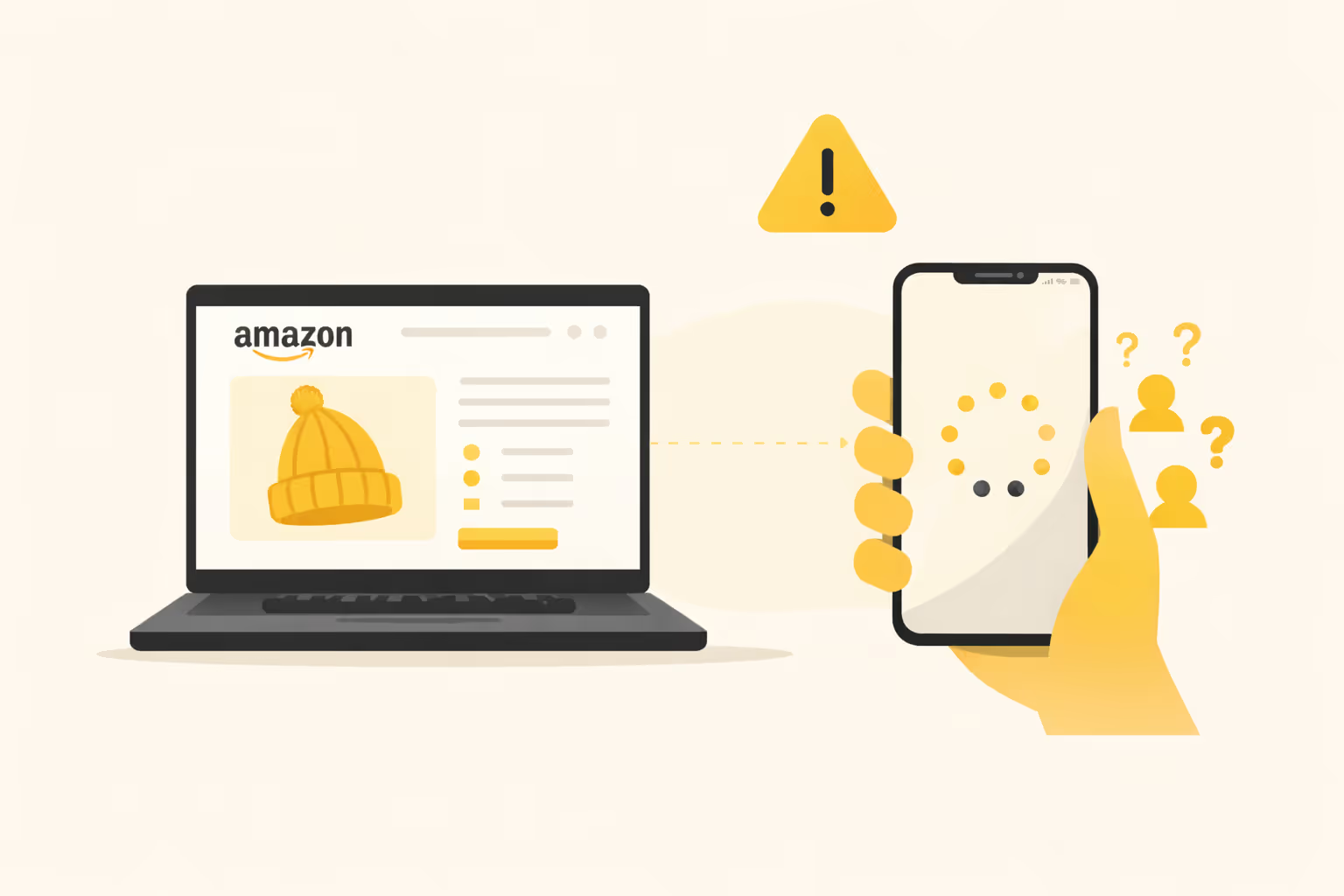
Over 80% of external traffic comes from mobile devices, yet many sellers optimize only for desktop shoppers. Mobile users have different browsing behaviors, shorter attention spans, and less patience for slow-loading content. If your listing or external content doesn't work seamlessly on phones, you're losing the majority of potential customers.
Make mobile your priority:
- Test your Amazon listing on multiple mobile devices (iPhone, Android, tablets)
- Ensure product images load quickly and display clearly on small screens
- Keep bullet points scannable without excessive scrolling on mobile
- Verify product videos play smoothly on mobile without buffering
- Check that your external content (blog posts, landing pages) is mobile-responsive
- Test link-in-bio tools on mobile devices to ensure a smooth click-through experience
- Monitor mobile vs. desktop conversion rates separately in Amazon Attribution
Wrong Traffic-Product Match
Sending beauty bloggers to promote tech products creates misaligned audiences that don't convert. A fitness influencer's followers aren't interested in kitchen gadgets, and Pinterest users searching for home decor won't buy industrial tools. This mismatch wastes money on clicks that never had conversion potential.
Match traffic to your product:
- Research where your ideal buyers actually spend time online
- Analyze competitor traffic sources using tools like SimilarWeb
- Verify influencer audience demographics match your target customer profile
- Review engagement on similar products within each platform before committing budget
- Test small campaigns on each channel before scaling investment
- Match content style to platform expectations (short videos for TikTok, long-form for blogs)
Giving Up Too Early
Most sellers quit after 10 to 14 days when they don't see immediate results, but external traffic requires a minimum of 30 days per channel to gather meaningful data. Organic social media takes 60 to 90 days to build momentum, while blog content needs time to rank in search engines. Premature abandonment means you never reach the point where campaigns become profitable.
Commit to the timeline:
- Commit to at least 30 days of consistent effort per traffic channel before evaluating
- Set realistic timeline expectations: organic takes 60-90 days, paid shows results faster
- Track leading indicators (clicks, engagement) even before sales materialize
- Create a 90-day content calendar before launching to ensure consistency
- Focus on one channel at a time until you see traction
- Document learnings weekly so you can adjust strategy based on data, not emotions
Inconsistent Posting Schedules
Posting three times one week, then disappearing for two weeks, destroys any momentum you've built. Consistency beats intensity in external traffic generation, as algorithms on platforms like Instagram and TikTok reward regular posting with better visibility. Sporadic posting trains your audience not to expect content from you, killing engagement rates.
Build a sustainable schedule:
- Create a sustainable content calendar you can maintain long-term
- Start with a frequency you can sustain (2-3 posts weekly beats daily posts that burn you out)
- Batch-create content in advance during productive periods (create 10-15 pieces at once)
- Use scheduling tools like Buffer, Later, or Hootsuite to automate posting
- Set specific content creation days in your calendar and treat them as non-negotiable
- Build a simple content library with templates for faster creation
- Have backup content ready for weeks when you're too busy to create fresh material
Avoiding these seven mistakes gives you a massive advantage over competitors who stumble through trial and error. Fix these issues before launch, and your external traffic campaigns will convert profitably from day one.
Create Sustainable Sales Momentum Beyond Amazon PPC
Driving external traffic is not about chasing random clicks. It is about building predictable demand, sending the right buyers to optimized listings, and letting Amazon’s algorithm compound the results over time. When attribution, channel selection, content, and conversion work together, external traffic becomes a growth asset, not a cost.
At Olifant Digital, we help established Amazon sellers and eCommerce brands turn external traffic into measurable revenue and higher profit, not guesswork. When you are ready to scale beyond PPC and build a system that holds up long term, that’s where we step in.