

Introduction
Amazon sellers spend money on ads long before they understand what they’re buying. Some scale profitably. Others quietly bleed cash and blame the platform. The real question isn’t tactics or tools, it’s decision quality.
Is Amazon PPC Advertising Worth It depends on how margins, timing, and expectations intersect. This guide helps you assess that intersection clearly, before advertising becomes an expensive experiment.
The Truth About Amazon PPC Profitability: Real ROI Data From 9.7M Sellers
Here's the truth most sellers miss: Amazon PPC isn't a simple yes or no question; it's a profitability equation that changes based on your margins, category, and optimization skills.
After analyzing performance data from Amazon's 9.7 million active sellers and current advertising benchmarks, the answer is yes for most sellers, but with critical caveats. When properly optimized, Amazon PPC typically delivers 3-4x return on ad spend (ROAS) for established products, meaning every dollar you invest generates three to four dollars in sales revenue.
However, this isn't guaranteed. Your actual profitability depends on three fundamental factors: your profit margins, your category's competitiveness, and how well you manage your campaigns.
This is also why many sellers pair PPC with Amazon SEO services, since organic rankings lower long-term ad dependence and stabilize returns.
Many brands also work with specialized agencies like Create&Grow SEO and link-building services to strengthen their organic rankings through high-authority backlinks, reducing long-term dependency on paid ads and stabilizing profitability.
Real ROI Benchmarks: What Sellers Actually Earn From Amazon PPC
Let's cut through the marketing fluff and look at what sellers are actually experiencing in 2025:
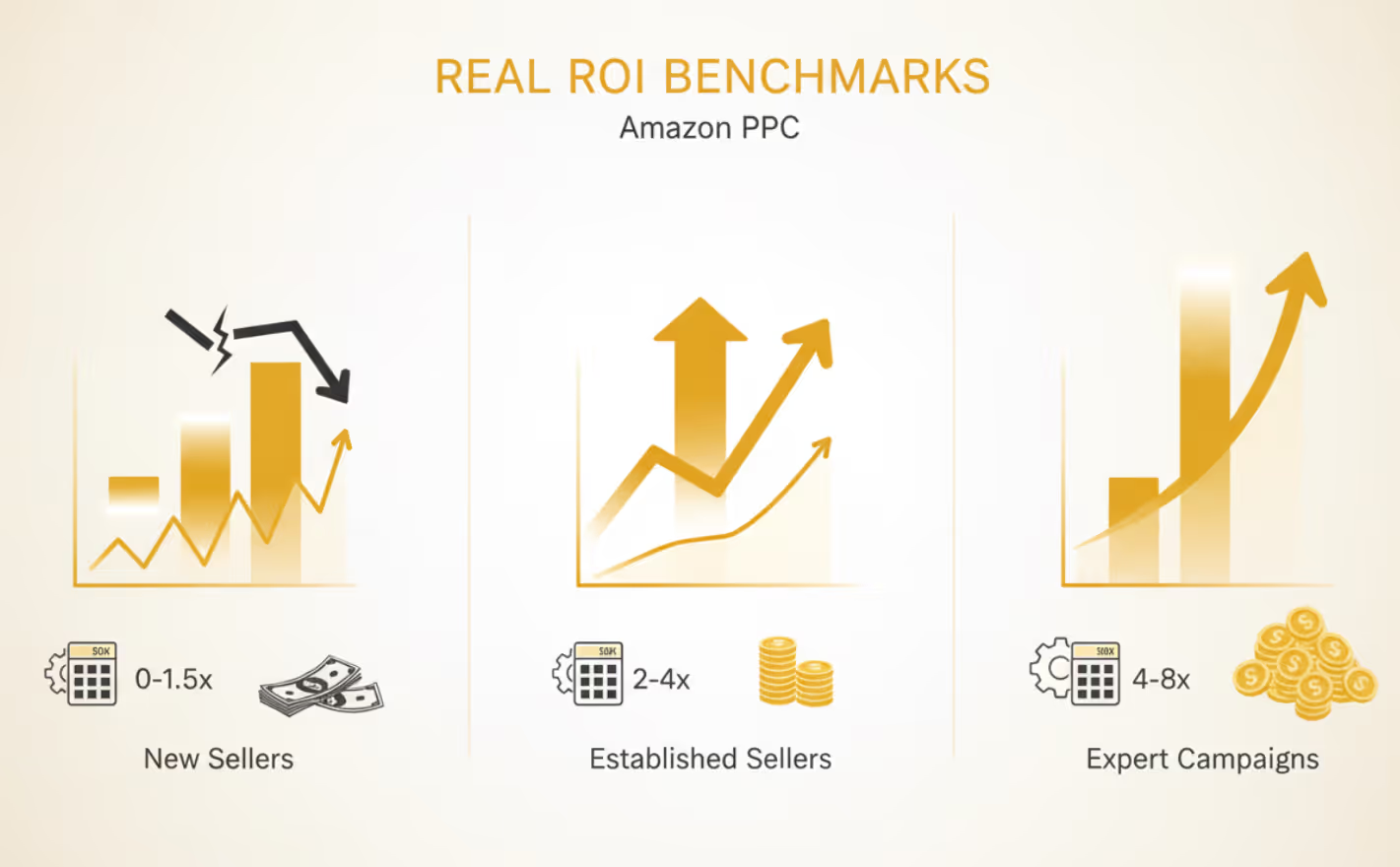
New Sellers (First 90 Days)
Expected ROAS: Break-even to 1.5x
When you're launching a new product or starting fresh on Amazon, don't expect immediate profitability from PPC. According to current marketplace data, new sellers typically experience:
- Days 1-30: Learning phase with high ACoS of 40-60% (often losing money per sale)
- Days 31-60: Optimization phase bringing ACoS down to 30-40%
- Days 61-90+: Mature campaigns achieving target ACoS of 15-30%
The reality? You're investing in momentum and organic ranking, not immediate profit. New sellers should budget for 60-90 days before expecting profitable returns from their PPC campaigns.
Established Sellers (Products with Sales History)
Expected ROAS: 2-4x
Once your product has proven market fit and accumulated reviews, your PPC economics improve dramatically. Industry benchmarks show that Sponsored Products deliver an average 3.41x ROAS, while Sponsored Brands achieve approximately 3.06x ROAS.
What this means in real dollars: For every $1,000 you spend on Amazon PPC as an established seller, you can expect $2,000-$4,000 in attributed sales revenue. However, remember that revenue isn't the same as profit; you need to subtract your product costs, Amazon fees, and other expenses to determine actual profitability.
Highly Optimized Campaigns (Expert-Level Management)
Expected ROAS: 4-8x
The top-performing Amazon sellers, those who continuously optimize keywords, adjust bids strategically, and leverage advanced targeting, can achieve exceptional returns. These sellers typically:
- Maintain ACoS below 20% (compared to the platform average of 29% in 2025)
- Generate ROAS exceeding 5x through strategic campaign segmentation
- Use automation tools and data-driven bid adjustments to maximize efficiency
- Implement negative keyword strategies that eliminate wasted spend
The difference between average and expert sellers? Strategic precision, not bigger budgets. A seller spending $50/day with expert optimization often outperforms a seller spending $200/day with a poor campaign structure.
Decoding ACoS: Your Primary Profitability Compass
Beyond ROAS, ACoS (Advertising Cost of Sale) serves as your daily decision-making metric. It's calculated as: (Ad Spend ÷ Ad Revenue) × 100.
Current Amazon advertising data shows the platform-wide average sitting at 29%, with notable variations:
- Supplements, Beauty, Home Décor: 25-35% ACoS range
- Kitchen, Sports, Toys: 20-30% ACoS range
- Electronics, Books: 15-25% ACoS range
The profitability formula: If your product carries a 40% net margin after all fees and costs, that's your break-even ACoS. Target 10-30 percentage points below break-even to ensure sustainable profits. A 40% margin product should target a 25-30% ACoS maximum.
The Four Scenarios Where PPC Pays Off Handsomely
Scenario 1: High-Margin Products (30%+ Net Margin)
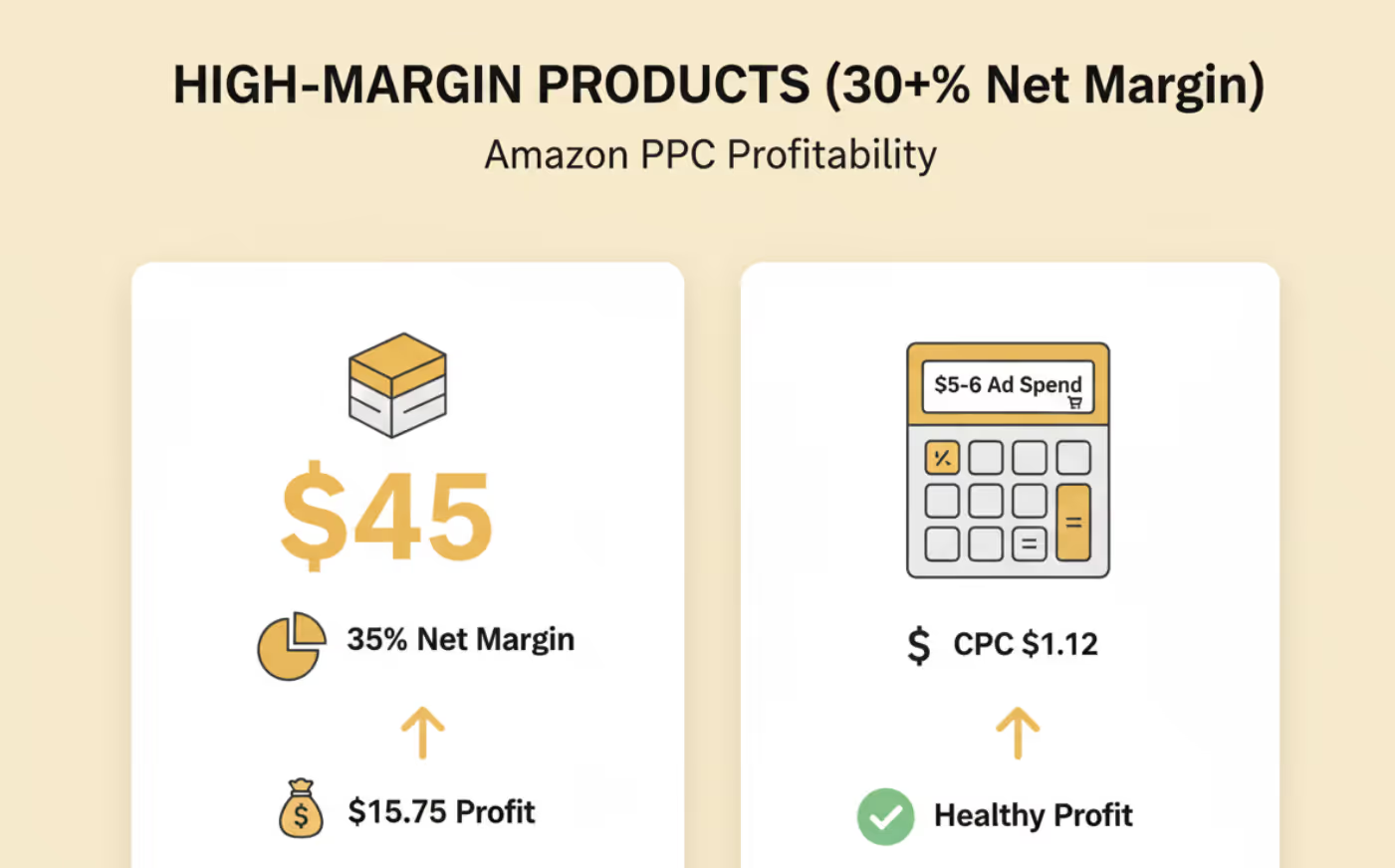
Analysis of profitable sellers reveals a clear pattern: those with net margins above 30% have the financial runway to absorb temporary ACoS spikes while optimizing campaigns.
Example calculation: A $45 product with 35% margin ($15.75 profit) can allocate $5-6 per sale to advertising while maintaining healthy profitability, even at the current average CPC of $1.12.
Scenario 2: Crowded Categories Demanding Paid Visibility
In categories where the first page is dominated by established sellers with 1,000+ reviews, organic-only strategies face a 6-12 month timeline to gain traction. Amazon's ranking algorithm prioritizes sales velocity, creating a catch-22: you need sales to rank, but need ranking to get sales.
PPC breaks this cycle by generating immediate sales velocity, typically achieving first-page visibility in 30-60 days versus 6+ months organically.
Scenario 3: Launch Phase Strategy (First 90 Days)
With over 60% of Amazon's total sales now coming from third-party sellers, launching without PPC means invisibility. The strategic approach: front-load aggressive spending to capture initial market position, then optimize down to sustainable levels.
Scenario 4: High-Conversion Shopping Events
During Prime Day, Black Friday, and Q4, something counterintuitive happens: while CPCs spike to $1.89-$2.12 (65-90% above normal), conversion rates often double. The math works when twice as many clicks convert despite costing 75% more.
Pro strategy: Increase budgets 48 hours before events to capture early momentum, when competition hasn't fully ramped up yet.
Three Death Traps That Guarantee PPC Losses
Death Trap 1: Insufficient Margin Structure
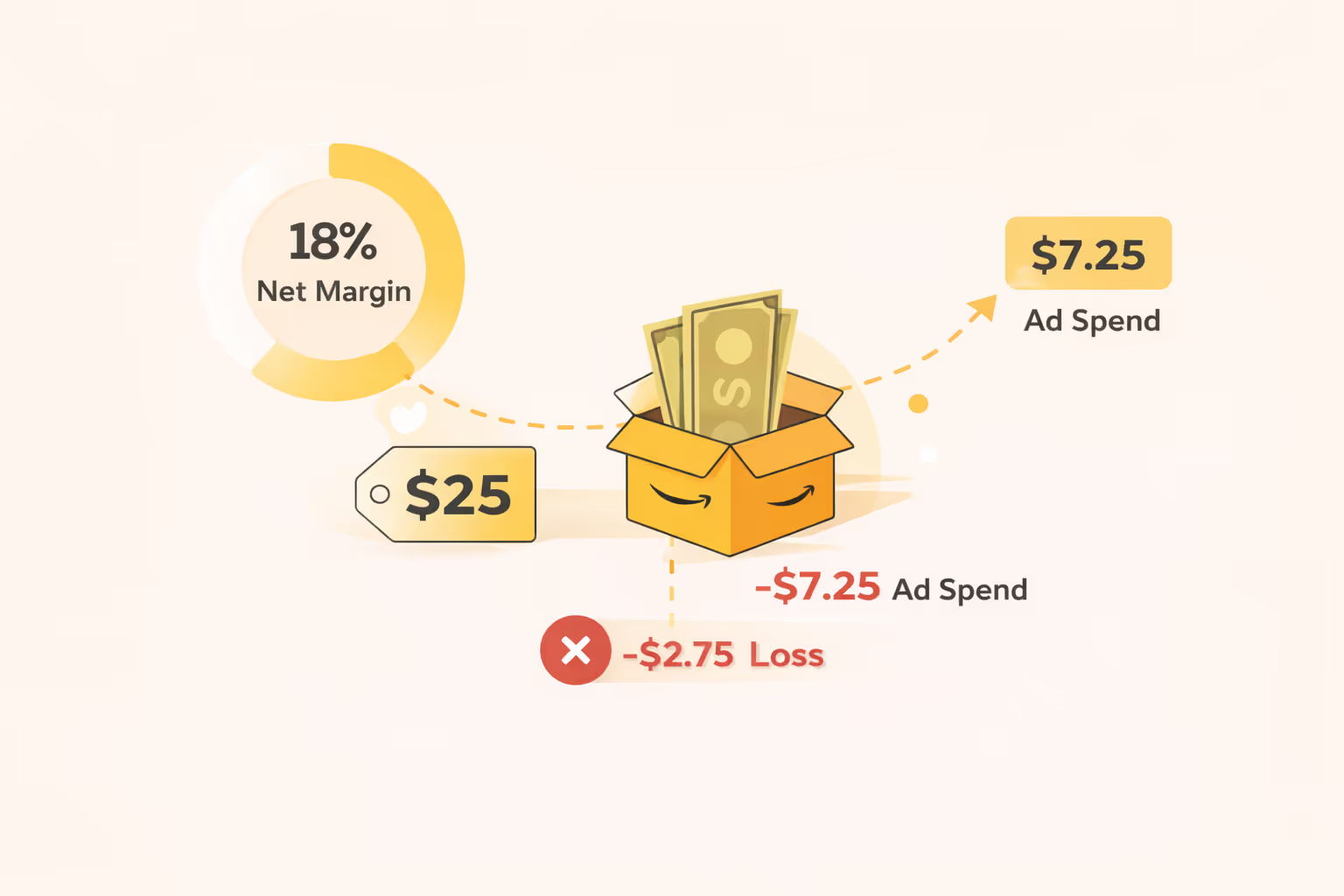
The harsh mathematics: At 29% average ACoS, a product with only 18% net margin loses money on every PPC-driven sale.
Real example: $25 product × 18% margin = $4.50 profit. At 29% ACoS, you're spending $7.25 in ads to generate that $25 sale. Net result: -$2.75 per sale. Amazon profitability experts universally recommend 25%+ margins as the minimum threshold for sustainable PPC.
Death Trap 2: Entering Keyword Battlegrounds Unprepared
Categories like supplements, phone accessories, and generic electronics have average CPCs exceeding $1.45, often with 50-100 competitors bidding on the same terms. Without unique product differentiation or a 6-month budget to outlast competitors, you're burning capital with minimal return.
Death Trap 3: Advertising Conversion Problems
Products rated below 3.5 stars convert at roughly 5% versus the 10-15% platform average. This means you need 2-3x more clicks (and ad spend) to generate the same sales.
The fix-first principle: Resolve product quality issues, accumulate 25+ reviews averaging 4+ stars, then launch PPC when your listing can convert traffic efficiently.
The Strategic Reality: Investment, Not Gamble
For sellers meeting three criteria, healthy margins (30%+), competitive products, and commitment to data-driven optimization, Amazon PPC delivers measurable returns while building long-term organic assets.
Non-negotiable requirements:
- Net margins of 25-30% minimum to absorb advertising costs
- 60-90 day patient capital for campaign maturation
- Weekly optimization of keywords, bids, and negative terms
- Complementary excellence in listing optimization and inventory management
With Amazon's advertising revenue reaching $56.2 billion and year-over-year CPC increases of 22%, the platform is becoming more expensive. But the alternative, zero visibility in a marketplace with 9.7 million sellers, is costlier.
The winners aren't outspending competitors; they're outsmarting them with superior unit economics, rigorous tracking, and ruthless optimization based on data rather than assumptions.
Where Does Amazon PPC Really Stack Up? (Channel-by-Channel ROI Breakdown)
Amazon PPC isn't competing with other advertising channels; it's solving a completely different problem. While Google Ads captures search intent and Facebook Ads builds awareness, Amazon PPC converts ready-to-buy shoppers already on the platform with their credit cards loaded.
The question isn't which channel is "better", it's which combination delivers maximum ROI for your specific business stage and goals.
The Direct Comparison: Amazon PPC vs. Major Advertising Channels
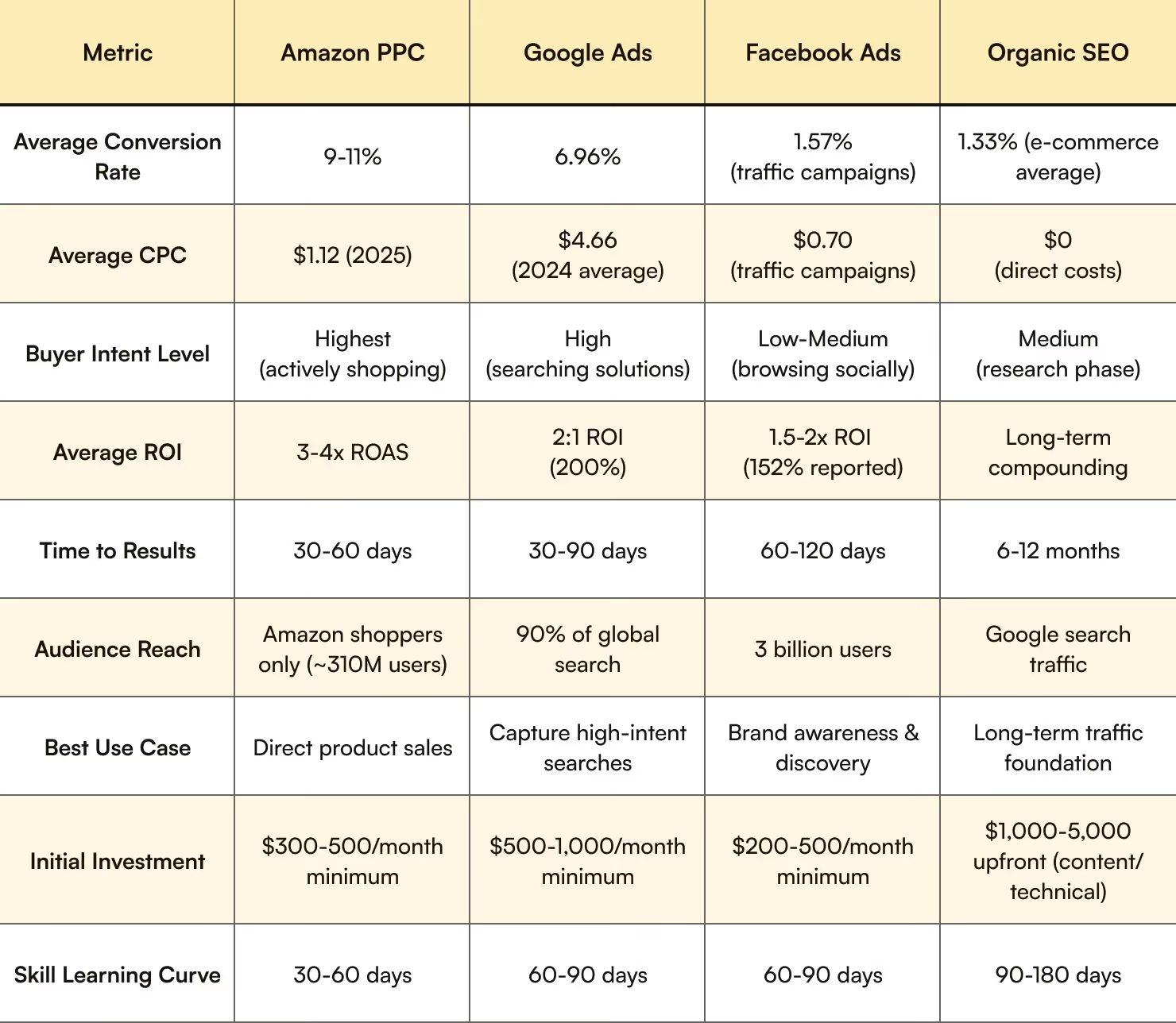
Why Amazon PPC's 9-11% Conversion Rate Matters
The platform-wide average conversion rate of 9-11% on Amazon isn't random luck; it's intentional buyer behavior. When someone searches "wireless headphones" on Amazon versus Google, they're in buying mode, not research mode.
Here's the critical insight: Industry research from Search Engine Land found that "where a website might convert at 5%, it's not unusual to see 20% on an Amazon listing." This happens because Amazon is a closed platform where the listings, ads, and purchase funnel all occur in one environment, eliminating the friction of sending customers off-site.
This means Amazon PPC can deliver 2-4x higher conversion rates than sending traffic to your own website through Google or Facebook Ads.
Google Ads: Broader Reach, Lower Conversion (But Still Valuable)
Google Ads captures people earlier in the buying journey, when they're searching for solutions, comparing options, or gathering information. This explains why Google's average e-commerce conversion rate sits around 6.96%, roughly 35% lower than Amazon's.
However, Google's advantage is audience size and discovery potential. You can reach shoppers who don't know your product exists yet, whereas Amazon PPC only targets people already browsing the platform. For brand-new products or categories, Google Ads often delivers the first introduction to potential customers.
Cost consideration: With an average CPC of $4.66, you're paying 4x more per click than Amazon, though this varies dramatically by industry. Google works best when you have strong brand recognition or unique products that benefit from pre-Amazon education.
Facebook Ads: Awareness Machine, Not Sales Driver
Facebook's 1.57% average conversion rate for traffic campaigns tells the story: people scrolling Instagram or Facebook aren't there to shop, they're there to connect, browse, and discover.
Where Facebook wins: Building audiences, retargeting website visitors, and creating brand recognition before sending traffic to Amazon. 40% of marketers report that Facebook drives significant ROI, not from direct sales, but from creating the awareness that leads to future purchases.
Strategic positioning: Use Facebook to introduce your product, demonstrate use cases through video, and build audiences you can retarget with Amazon-focused campaigns later. Direct Facebook → Amazon sales rarely work; Facebook → Email List → Amazon performs significantly better.
Organic SEO: The Long Game That Compounds
Unlike paid channels, where you stop when budgets end, organic SEO delivers compounding returns over time. An article ranking #1 for "best travel backpacks" generates clicks for years without additional investment.
The tradeoff: SEO requires 6-12 months before meaningful results appear, with initial investments of $1,000-5,000 for content creation and technical optimization. However, organic traffic converts at ~1.33% for e-commerce—lower than paid ads because visitors are still researching.
Best practice: Build SEO foundations early (product reviews, category guides, comparison content) so that by month 6-12, you have consistent free traffic complementing your paid campaigns.
The Winning Multi-Channel Strategy
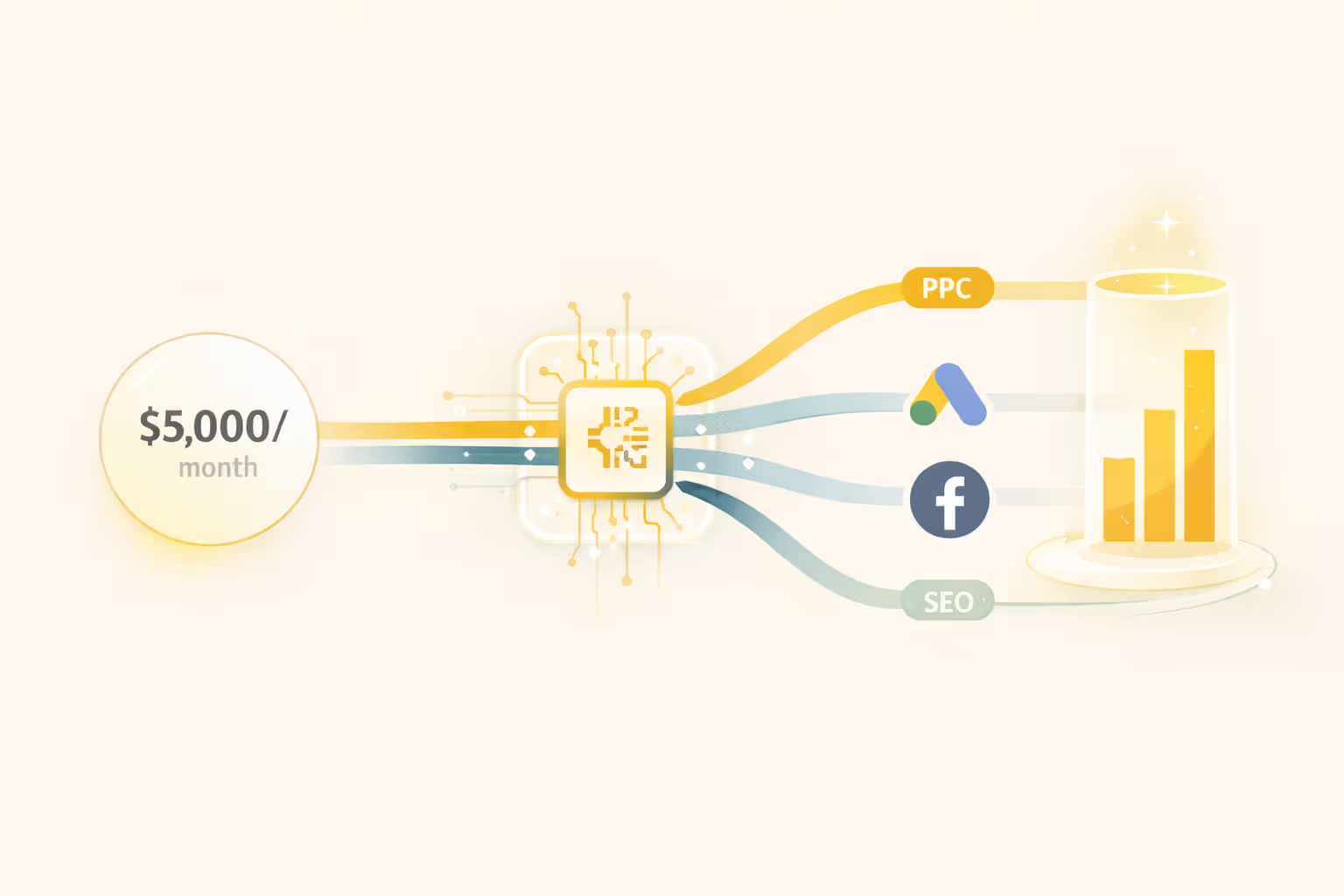
The highest-performing Amazon sellers don't choose one channel; they orchestrate all four strategically:
- Months 1-3: Launch with Amazon PPC (60% of budget) for immediate sales velocity + Google Ads (40% of budget) to capture high-intent searches for your category
- Months 4-6: Add Facebook Ads (20% of total budget) for awareness and audience building, while reducing Amazon PPC to 50% and Google to 30% as organic ranking improves
- Months 7-12: SEO content starts generating traffic; reduce paid spend to 60% of original levels while maintaining sales volume through organic gains
- Month 12+: Balanced portfolio: 40% Amazon PPC, 20% Google Ads, 20% Facebook retargeting, 20% SEO, with organic sales representing 40-60% of total revenue
The fundamental truth: Amazon PPC delivers the highest immediate ROI (3-4x ROAS) for product sales, but sustainable businesses diversify traffic sources to reduce dependency on any single channel's rising costs.
If you're spending $5,000/month on advertising, allocating $3,000 to Amazon PPC, $1,000 to Google Ads, $500 to Facebook, and $500 to SEO content, it typically outperforms putting all $5,000 into any single channel.
Amazon PPC Advertising Through a Profitability-First Lens
Amazon PPC isn’t good or bad; it’s mathematical. When margins are solid, listings convert, and campaigns are managed with discipline, PPC becomes a scalable profit lever. When those fundamentals are missing, it quietly drains cash. The difference is not budget size or tools; it’s decision quality guided by data. Treat PPC as an investment with clear benchmarks and timelines, not an experiment fueled by hope.
If you’re an Amazon seller or ecommerce brand owner looking to increase revenue while protecting profit, that’s exactly what we focus on at Olifant Digital. We step in when generic agency tactics stop working and turn Amazon advertising into a controlled, profitable system.
.webp)
Alex is the founder and CEO of Olifant Digital, where his team manages over $100M in annual Amazon client revenue across 50+ brands, and he runs a 7-figure Amazon brand of his own. That operator background shapes how the agency works: every tactic is tested with his own money before it reaches a client account. He oversees PPC methodology, creative, and conversion rate across all client accounts to make sure Olifant Digital scales brands profitably.


.png)
Mike reviews every Amazon article on this blog for strategic and technical accuracy before it publishes. As Director of Amazon Growth at Olifant Digital, he sets marketing strategy across client accounts and personally audits PPC at every stage of growth. He brings 8 years of daily Amazon operations across 7 and 8-figure brands including Beauty by Earth, Ekster, and Bullstrap, the kind of hands-on depth most agency directors delegate away.